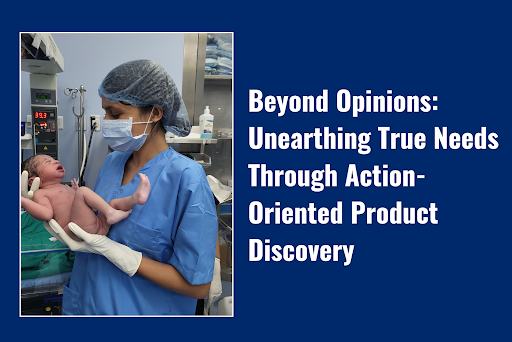

Product discovery is not a checkbox activity; it is the foundation of the product team. Over the past two years, I’ve navigated through five different product offerings, each built on a discovery process that started with a simple yet profound question — is this really a problem?
Early on, I realized something uncomfortable: not every problem statement we identify is real. Sometimes, it's just our hypothesis, disconnected from the actual field reality. In healthcare, this dissonance is amplified. Often, users aren't even aware of the problems they are facing. Their practices become habits, and inefficiencies are simply accepted norms. That’s where real discovery starts — not with assumptions, but with curiosity.
Strategy vs. Development: What's at the Core?People often ask — is product discovery about strategy or development? From my experience, it's both — and neither. It's about clarity. Clarity about the user's world, their pain, their process, and what truly matters to them. Strategy emerges from this clarity. Development becomes meaningful only when aligned with this clarity.
Hypotheses vs. Reality: The Power of User InterviewsWhen I first started conducting user interviews, I noticed something strange: the line between a problem and a perception was blurry. We’d pitch a problem and a potential solution, and users would respond positively. But were they genuinely validating the need? Or were they just being polite?
This dilemma reminded me of “The Mom Test” — a book that changed the way I ask questions. It teaches us that if you pitch your idea to your mom, she’ll praise it out of love. The real skill lies in asking the kind of questions that reveal what she truly wants — not what she thinks you want to hear.
Empathy: The Cornerstone of Product DiscoveryReal discovery starts with empathy — not just understanding what users do, but why they do it. This means listening beyond words, observing without judgment, and stepping into their world with genuine curiosity.
User empathy helps me:
- Spot the unspoken frustrations behind environment
- Understand emotional and physical constraints (especially in healthcare)
- Design for real-life context — not just ideal scenarios
- Respect their workarounds as wisdom, not mistake
Product discovery is not about pitching features. It’s about understanding the user's problems, constraints, and goals, and then taking a visionary leap toward a solution. But that leap must be tested — not through praise, but through commitment and advancement:
- Have they tried solving this before?
- What alternatives have they explored?
- How much time or money would this save them?
- How would this fit into their existing life or workflow?
This ensures that everyone on the team grows and progresses together on this journey.“I feel truly privileged to be part of such an amazing team, and I look forward to continuing to build impactful products that advance our mission of equalized care.”
These aren’t just validation questions — they are alignment tools. They separate real traction from false compliments. As I’ve learned:
“Compliments are the fool’s gold of customer learning: shiny, distracting, and entirely worthless.”
Pre-Launch and Post-Launch DiscoveryProduct discovery doesn’t end at launch. In fact, post-launch discovery is even more critical. That’s when you circle back to see what stuck, what didn’t, and what needs to evolve. It feeds into sales, marketing, and long-term product strategy.
Post-launch discovery answers questions like:
- Why did a user really like this feature?
- What pain point did it solve?
- What did they try earlier that failed?
- What else do they still need?
It’s in this phase that bitter feedback becomes gold. It may sting, but it tells you what no compliment ever will.
Final Thoughts: Build What MattersProduct discovery is a continuous loop — observe, hypothesize, test, learn, refine. It’s messy. It’s humbling. But when done right, it becomes the compass for every team —
- Observe what users do, not just what they say
- Let insight guide your vision, not assumptions
- Keep learning — before and after launch
Because when you focus on their reality, not just your idea, you build solutions that fit seamlessly into their lives.